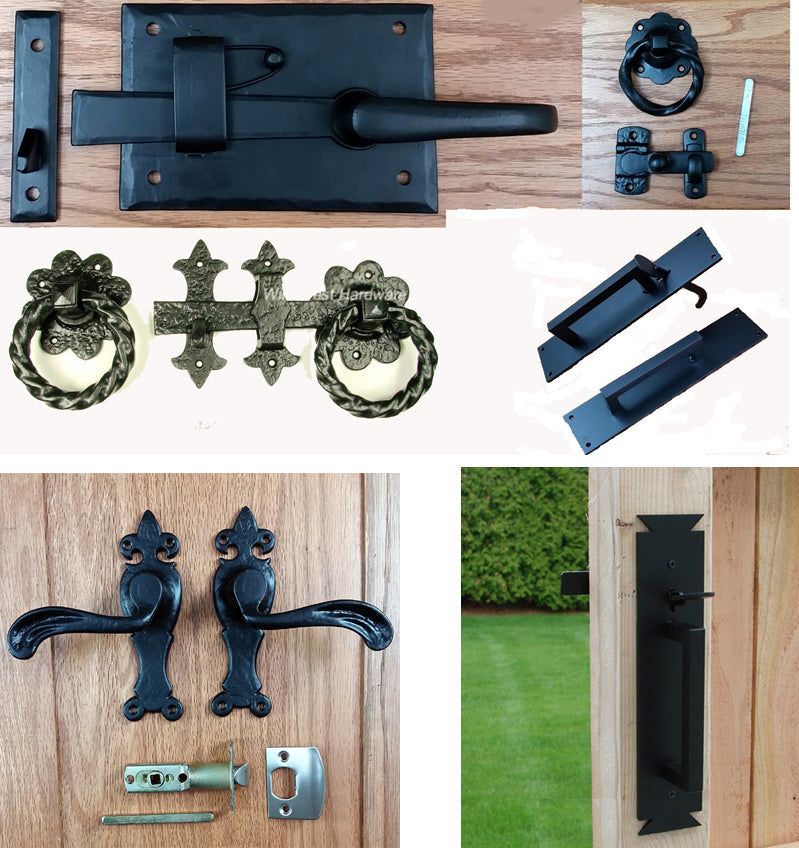
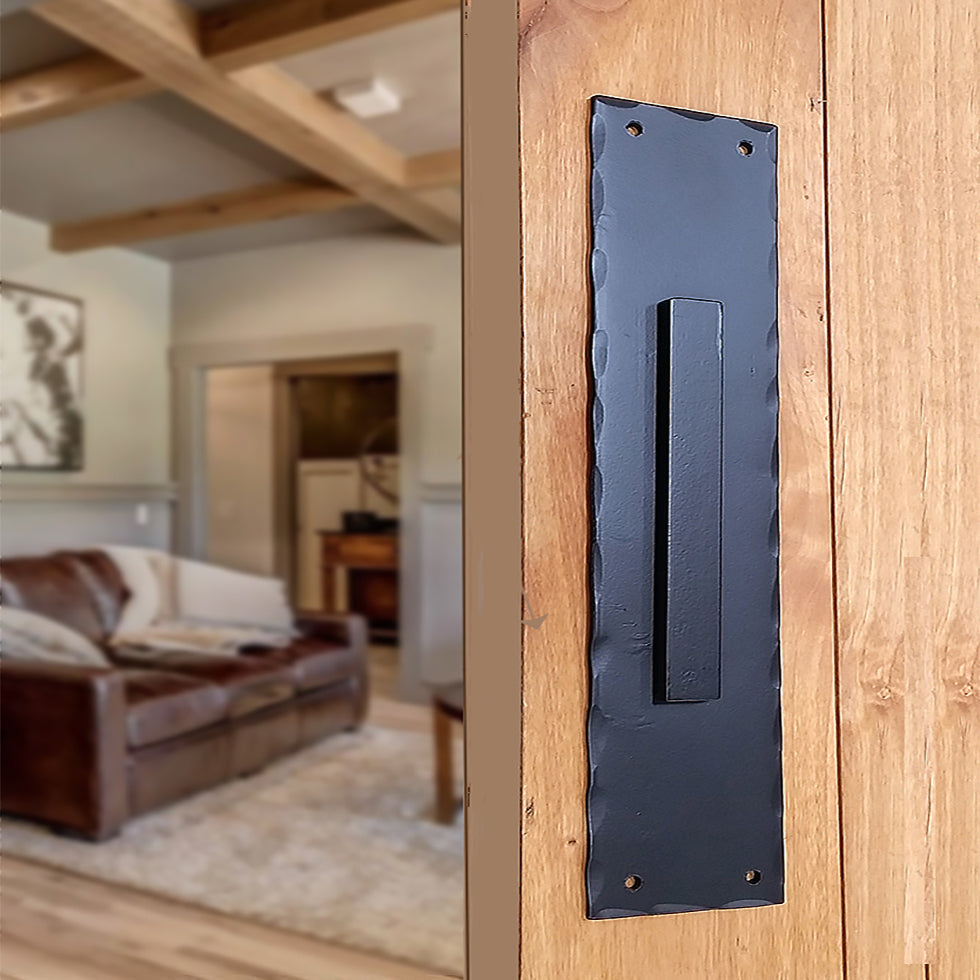

A thumb latch is the classic, easy-to-use hardware you’ll find on garden gates, courtyard entries, and rustic interior doors. Its aesthetic appeal is obvious, but the mechanism is wonderfully simple as well. Below, we break down what a thumb latch is, the parts involved, how a thumb latch works, and the pros and cons of using one.
What Is a Thumb Latch?

A thumb latch is a two-sided latch set that lets you open a door or gate by pressing a thumb piece on the outside. Pressing the thumb piece lifts a latch bar (also called a lever or drop bar) on the inside, clearing a catch/keeper and allowing the door to swing open.
The Anatomy of a Thumb Latch

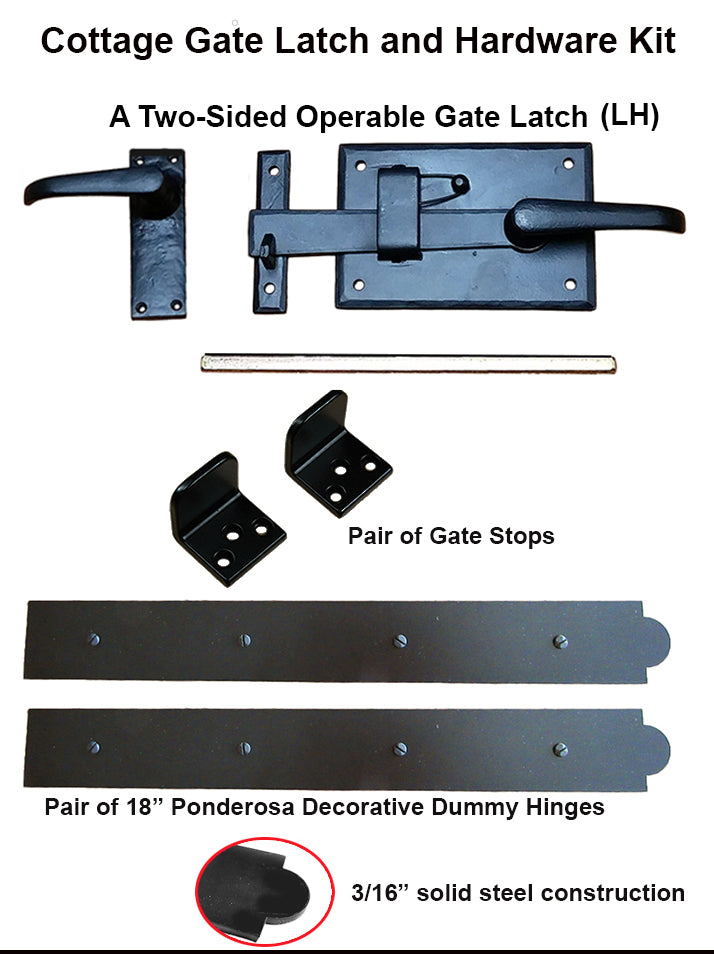
While styles vary, from hand-forged rustic to sleek modern, most sets include:
-
Thumb Piece (Exterior Lever): The part you press with your thumb.
-
Spindle/Stem: A rod that passes through the door/gate to connect the thumb piece to the interior latch bar.
-
Latch Bar (Interior Lever): Lifts when the thumb is pressed, releasing the keeper and allowing the door to open. Some styles “drop” back into place via gravity or a light spring.
-
Keeper/Catch/Strike: The receiver mounted on the frame or post. It holds the latch bar when the gate is closed.
-
Backplates/Rose: Decorative/functional plates behind the thumb piece and/or bar for stability and style.
-
Guide/Staple: A small bracket that supports the bar’s movement and keeps the alignment correct.
-
Privacy Pin/Stop (Optional): An interior pin or slide that prevents the exterior thumb from lifting the bar—handy for privacy when needed.
How a Thumb Latch Works: Step-by-Step
When the gate is closed, the latch bar rests in the keeper on the post, and the gate is secure. The rest of the process works this way:
-
Press the thumb piece: Your thumb pushes down the exterior lever.
-
Leverage transfer: The thumb piece pushes the spindle/stem, which lifts the interior latch bar.
-
Bar clears the keeper: As the bar rises, it disengages from the catch.
-
Open the gate: With the bar lifted, a gentle pull or push swings the gate open.
-
Automatic re-latch: When you close the gate, the beveled end of the bar rides up and drops back into the keeper (on gravity-latch styles). Some designs use a light spring assist.
Pros and Cons of a Thumb Latch

Pros
-
Intuitive operation: You simply press, lift, and go—gloves or full hands aren’t a problem.
-
Versatile style: Works with all sorts of styles, be it farmhouse, cottage, craftsman, or mid-century ranch aesthetics.
-
Durable and simple: Fewer internal parts than modern knob/lever sets.
-
Great for gates: Designed for thicker wood gates and outdoor conditions.
Cons
-
Not a lock: For security, pair with a deadbolt, padlock, or slide bolt.
-
Alignment matters: Sagging gates or mis-set posts can cause the bar to miss the keeper.
-
Finish care: Outdoor exposure requires the use of corrosion-resistant metals and finishes.
Final Words
A thumb latch works through straightforward leverage: press the exterior thumb piece, and the interior latch bar lifts free of its keeper, allowing the gate to swing open. That simple mechanical motion is why this type of latch remains a favorite.
To explore more gate hardware options, contact our team for personalized recommendations.